
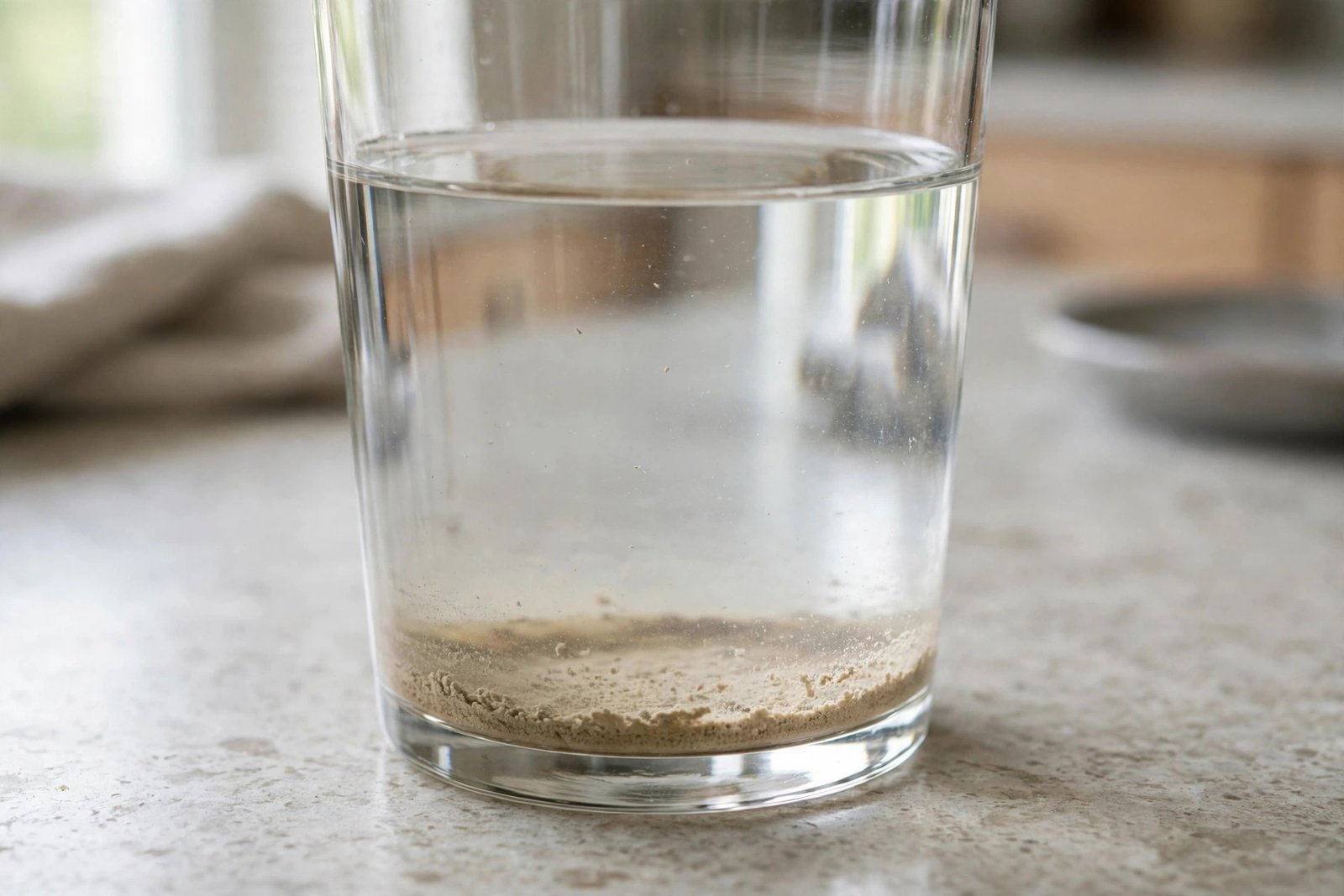

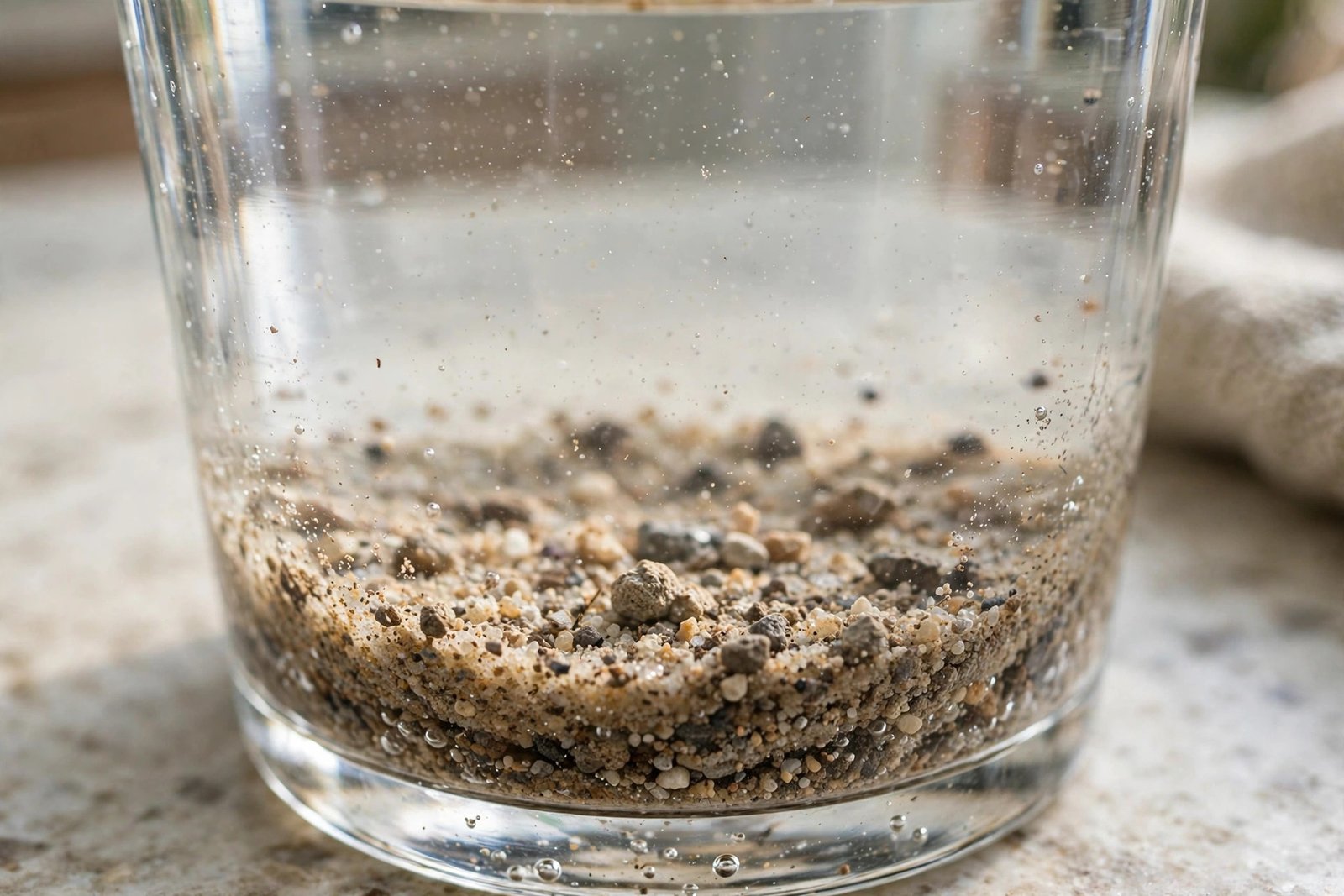
Sand or grit in tap water is unmistakable: it crunches between your teeth, settles at the bottom of a glass, and can wear out fixtures and appliances over time. It is also a symptom with several very different causes — and the right fix depends entirely on which one you have.
The most common causes
Well problems. For well owners, grit usually means the well pump is pulling sediment — the pump may sit too low, the well screen may be damaged, or heavy use may be stirring up the bottom. A sudden onset after years of clean water points to a well issue first.
City-water work and pipe breaks. On city water, grit often appears after mains work, a nearby break, or hydrant flushing, and usually clears within a day or two as the system settles. If it appears at only one tap, the cause is local to that tap.
Old or corroding pipes. Flaking scale and rust from ageing galvanised or iron pipes can feel exactly like sand. If grit comes with discoloured water and the house has old pipework, corrosion is a strong suspect.
A failing filter or softener. Sediment filters and softeners that are past their service life can release trapped material back into the water. If grit started soon after a filter change — or long after one was due — check the filter first: a spent cartridge is one of the common causes of bad-tasting or slow fridge water.
How to find the source in ten minutes
- Fill a clear glass and let it sit. True sand and grit sink to the bottom. Fine particles that stay suspended or colour the water point elsewhere.
- Check hot vs cold. Grit in hot water only suggests the water heater or hot lines; grit in both points to the supply.
- Check every tap. One tap only means a local fixture or line problem. Every tap means the supply or the entry-point treatment.
- Ask about timing. Grit that started after nearby road or mains work is usually temporary. Grit that grows steadily worse is a well or pipe problem developing.
Fixes that work — matched to the cause
- Temporary city-water grit: run the cold taps for several minutes and let the system settle. If it does not clear within a day or two, call your supplier.
- Well grit: have the well inspected — pump depth, screen condition and sediment levels. The lasting fix is usually a sediment filter at the entry point, sized for your flow, not a small tap filter.
- Corroding pipes: the affected runs need assessment and usually replacement. No filter fixes pipe corrosion.
- Spent treatment equipment: replace sediment cartridges on schedule and service softeners as directed. A filter left in far past its life becomes part of the problem.
- Protecting appliances: if grit is ongoing, an entry-point sediment filter protects the water heater, dishwasher and washing machine as well as your taps.
One caution: a fridge filter is not a sediment system. It can clog quickly on gritty water and may slow to a trickle — which is why our Slow Water Flow After a Filter Change guide starts with seating and supply checks. Fix the grit at its source first; the fridge filter then does its normal job of taste and chlorine, and our Complete EveryDrop Buying Guide helps you find the right cartridge. For strange particles in ice specifically, see Cloudy Ice and Black Specks.
FAQ
Why is there sand in my tap water?
Most often a well issue (pump or screen), temporary city-mains disturbance, corroding old pipes, or a spent sediment filter releasing trapped material.
Is gritty water safe to drink?
Sand itself is mainly a nuisance, but grit can signal well or pipe problems that deserve investigation — and it damages fixtures and appliances over time. Test if it persists.
Will a fridge filter remove sand from water?
No. Fridge filters are not designed as sediment systems and can clog on gritty water. Sediment needs entry-point filtration or a well fix.
How do I tell sand from other particles?
Let a glass sit: true sand and grit sink to the bottom. Particles that float, suspend, or colour the water point to a different cause.