
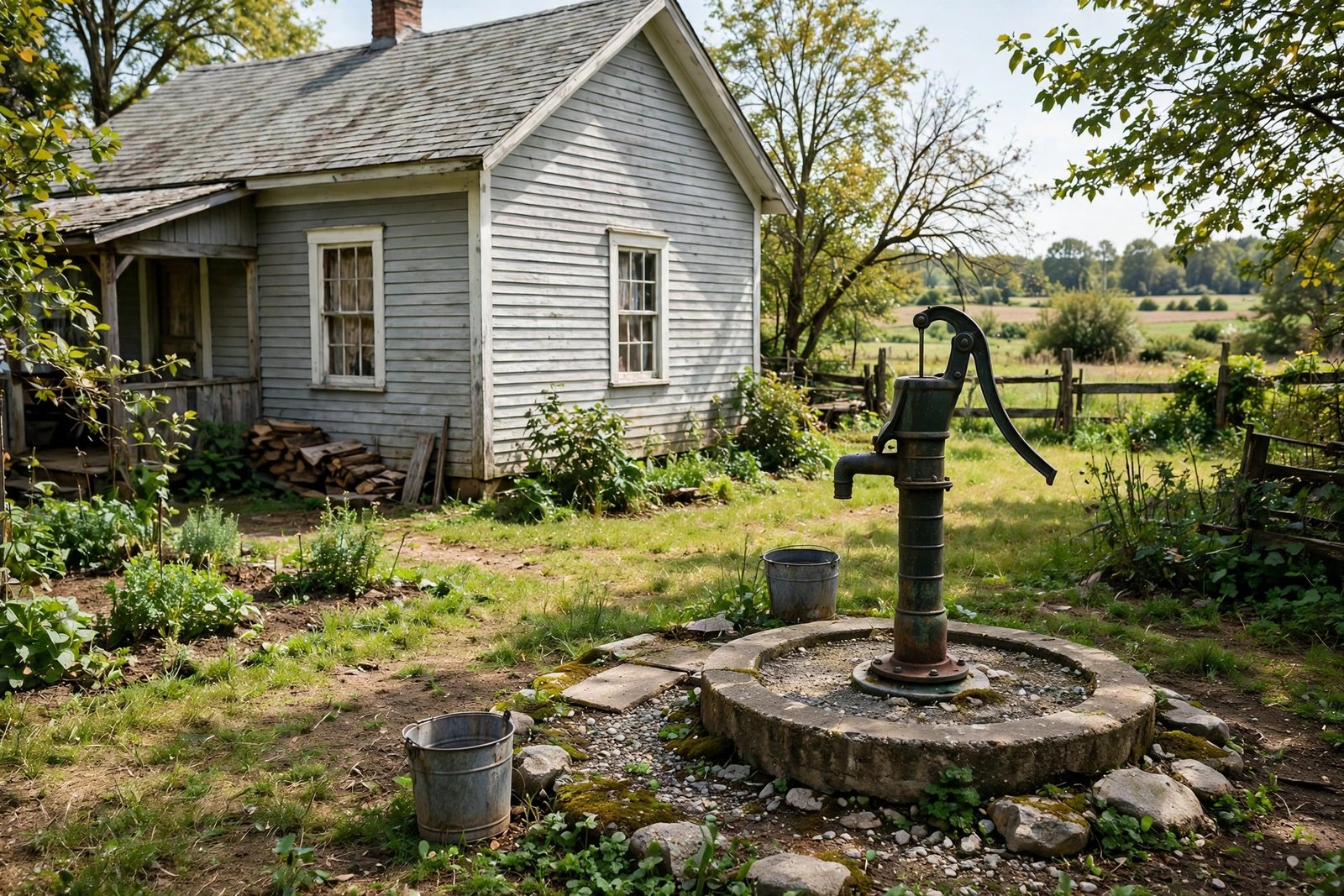

Well water is freedom — no water bill, no supplier — but it comes with a job city-water homes never see: you are your own water company. Testing, treatment and maintenance are all yours. The good news is that most well problems are well understood, and each has a fix that works — as long as you match the fix to the problem instead of guessing.
Rule one: test before you treat
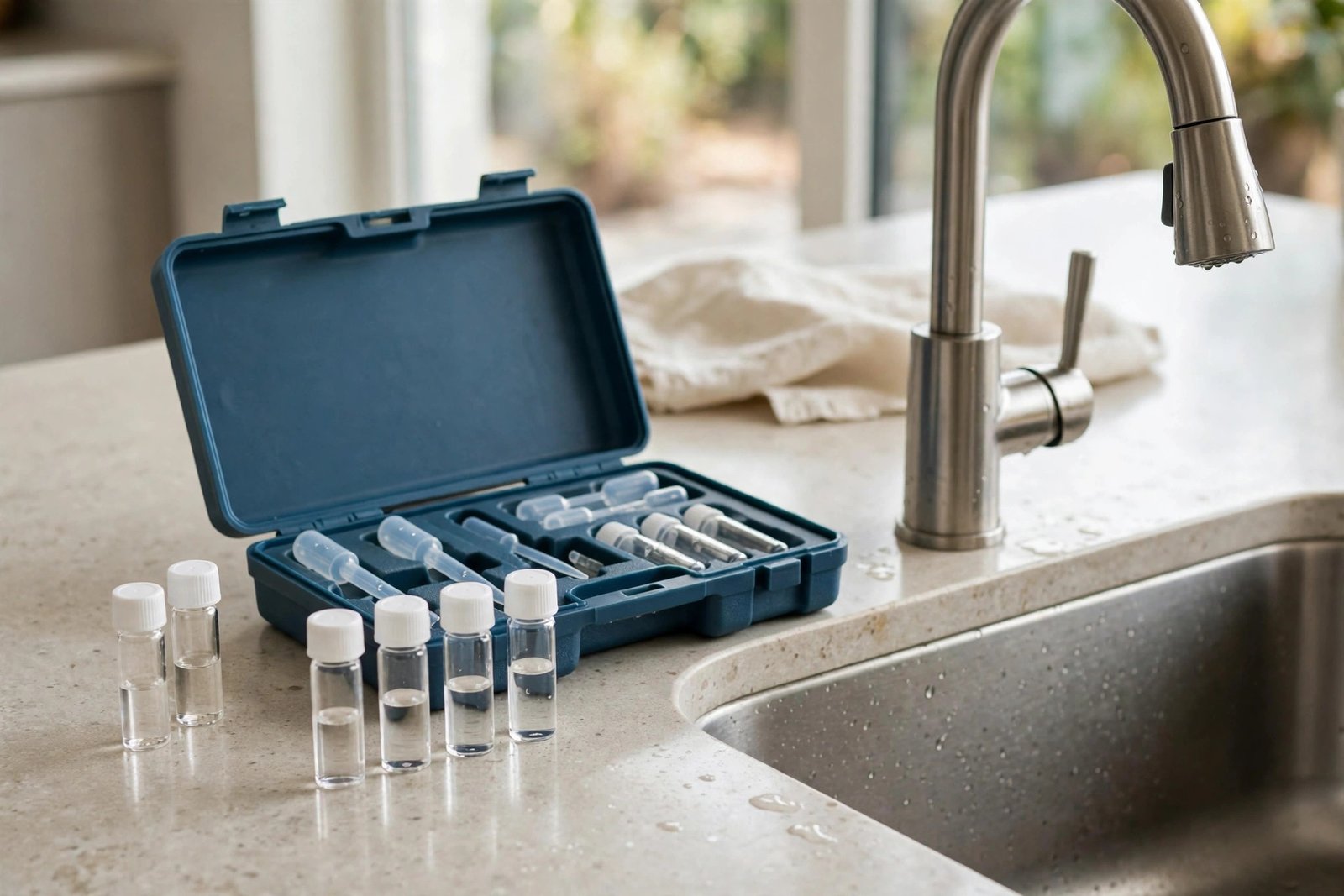
Every well problem below has more than one possible cause, and several look identical at the tap. A certified lab test — covering bacteria, pH, hardness, iron, manganese, nitrates and total dissolved solids as a baseline — costs far less than the wrong treatment system. Test annually at minimum, and immediately after flooding, nearby construction, or any sudden change in taste, colour or smell.
Hardness: scale everywhere
Hard water leaves scale on kettles and showerheads, spots on glassware, and stiff laundry. It is caused by dissolved calcium and magnesium. The standard fix is an ion-exchange softener sized for your household’s flow and hardness level. A fridge filter will not soften water — do not buy one expecting it to.
Iron and manganese: rust stains and metallic taste
Iron shows up as orange-brown stains, a metallic taste, and sometimes slimy build-up in toilet tanks. Manganese is similar but darker, almost black. Both are common in well water and both need their own treatment — typically an iron filter or a softener rated for iron removal, chosen by your tested iron level. Pouring money into a generic filter that is not rated for iron is the classic well-owner mistake.
Sediment: sand, silt and grit
Sediment wears out fixtures, clogs treatment equipment and makes water look dirty. The fix is a sediment filter at the entry point, with cartridge size matched to your flow rate so it does not strangle pressure. Small tap filters are not a substitute — they clog fast and protect nothing else in the house.
Bacteria: the one you must not guess at
Bacteria in well water — shown by a positive coliform test — is the problem where guessing is genuinely dangerous. Shock chlorination of the well is the usual first step, followed by re-testing to confirm it worked. If bacteria keep returning, the well itself needs inspection: a cracked casing, a bad seal or surface water getting in will defeat any filter you buy. Ongoing disinfection (chlorination or UV treatment, professionally sized) is a system decision, not a cartridge purchase. Never treat a positive bacteria test with a fridge filter.
Smells, tastes and low pressure
- Rotten-egg smell: usually hydrogen sulphide from bacteria in the well or water heater. Shock chlorination or a dedicated treatment unit, depending on the source.
- Salty or chemical taste: test for chlorides, nitrates and nearby contamination sources such as septic systems or agriculture.
- Low pressure: check the pressure tank and pump before blaming the water. A waterlogged pressure tank mimics a supply problem exactly.
The right order
- Test (certified lab, full baseline).
- Fix the well itself if inspection finds a fault — no treatment compensates for a broken well.
- Treat in order: sediment first (it protects everything downstream), then hardness and iron, then disinfection if needed.
- Maintain on schedule: cartridges, salt, UV lamps and annual re-tests.
For the water you actually drink from the fridge, a genuine fridge filter still handles taste and chlorine once the well treatment is right — our Complete EveryDrop Buying Guide helps you find the right cartridge. But well problems are entry-point problems, and they need entry-point answers. Related reading: Slow Water Flow After a Filter Change and Cloudy Ice and Black Specks.
FAQ
What is the most common well water problem?
Hardness, followed closely by iron and sediment. All three are common, all three are testable, and each needs different treatment.
How often should well water be tested?
At least once a year, plus immediately after flooding, construction nearby, or any sudden change in taste, colour or smell.
Can a fridge filter fix well water problems?
No. Fridge filters handle taste and chlorine for fridge water only. Well problems need entry-point treatment matched to test results.
My well test came back positive for bacteria. What do I do?
Shock-chlorinate the well and re-test. If bacteria return, get the well inspected — a cracked casing or bad seal must be fixed, and ongoing disinfection may be needed.