
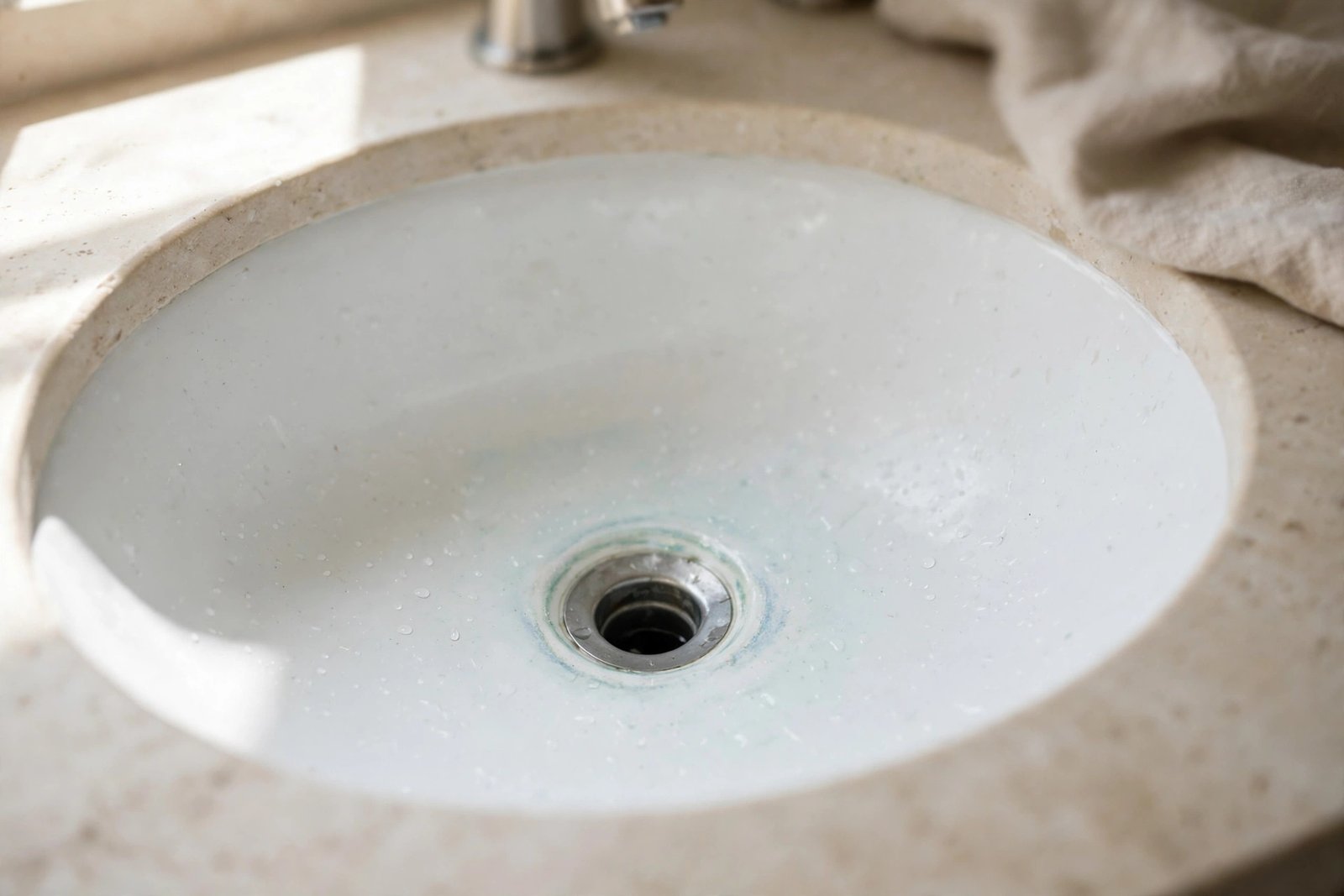

Green or blue stains around a sink drain, in the bathtub or on a white fixture are hard to miss — and they usually point to one thing: copper corrosion somewhere in your plumbing. The stains are not dirt, and scrubbing alone will not stop them coming back. Here is what causes them, when to worry, and what actually fixes the problem.
Why copper turns water green or blue
Most homes with copper pipes or copper fittings have a thin protective layer inside the pipe. When water chemistry attacks that layer — most commonly water that is acidic (low pH) — tiny amounts of copper dissolve into the water. When that water dries on a fixture, the copper oxidises and leaves the familiar blue-green mark. You may also notice a metallic taste, or blue-green tinting in the water itself when it has sat in the pipes overnight.
New copper plumbing can stain a little at first while the protective layer forms. Persistent staining in older plumbing is a different story: it means corrosion is ongoing.
What makes corrosion worse
- Acidic water (pH below about 7). The single biggest driver. Well water is more often acidic than city water, but city supplies can be too.
- Soft, low-mineral water. Very soft water is more aggressive toward copper than moderately hard water.
- Hot water lines. Corrosion runs faster in hot water, which is why stains often appear first around hot taps and in bathtubs.
- Electrical grounding issues. Stray electrical currents through copper pipes can accelerate corrosion dramatically — an electrician, not a filter, is the fix for that one.
- Old or poorly installed pipework. Thin-wall pipe, mixed metals and flux residue from installation all raise the risk.
When to test — and when to call someone
Test your water if staining is new, heavy, or appears alongside a metallic taste: a basic test should include pH and copper level. High copper in drinking water is a health concern at sustained levels, so do not ignore it — and do not try to “filter it away” at the fridge. A fridge filter is not a corrosion treatment, and treating the symptom at one tap while pipes keep corroding solves nothing.
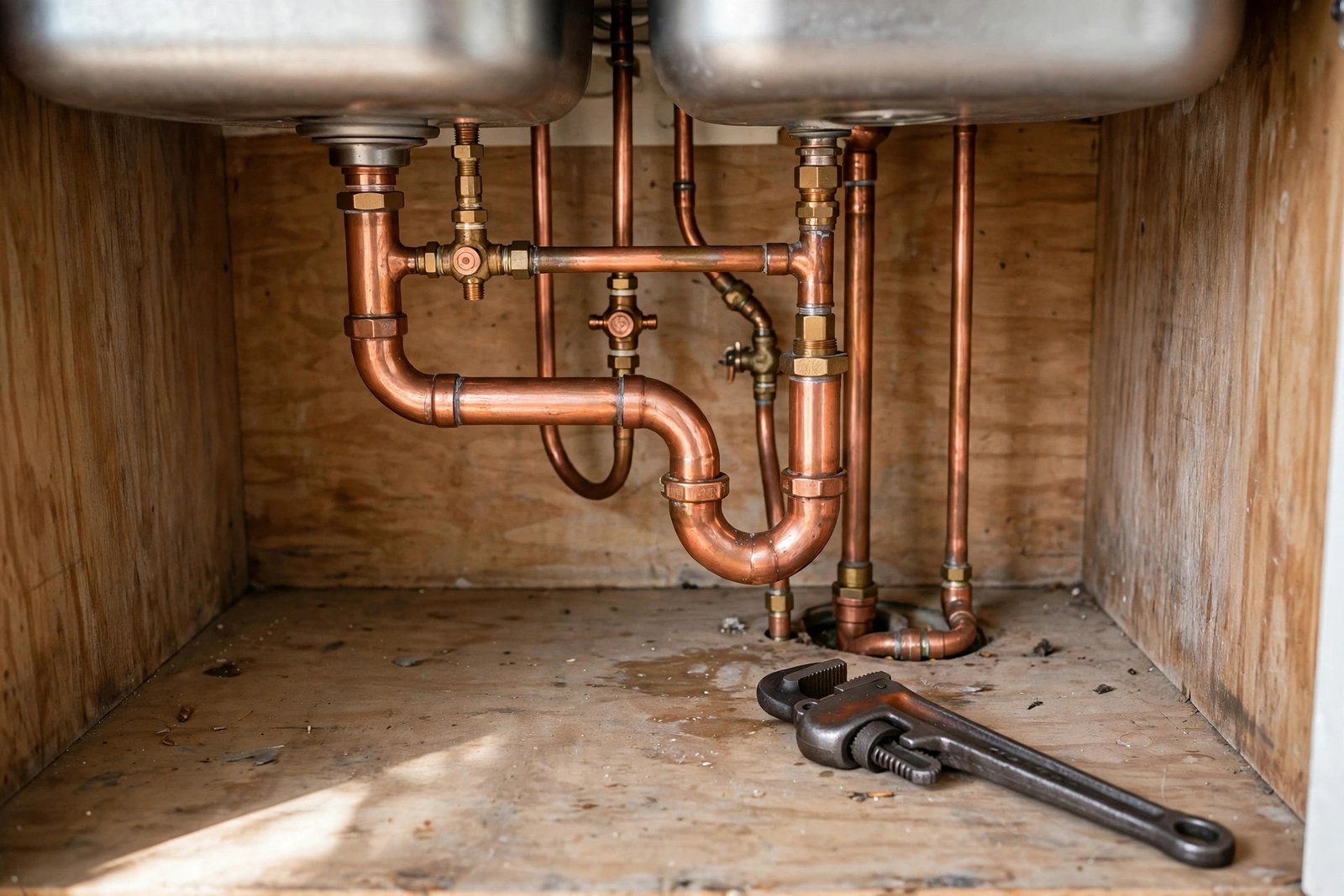
Call a plumber if: staining is getting worse, pipes are visibly thinning or pinhole-leaking, water runs blue after sitting overnight, or you suspect an electrical cause. These are plumbing problems, not filter problems.
Fixes that actually stop the stains
- Correct the water chemistry. For acidic well water, an acid-neutralising system (usually calcite) raises pH before the water reaches the pipes. This treats the cause, not the stain.
- Replace damaged sections. Pinhole leaks and heavily corroded runs need replacing, not patching over and over.
- Fix electrical faults. If stray current is the driver, an electrician must find and remove the source.
- Clean the stains last. Only after the cause is fixed is it worth removing the marks themselves — a vinegar-based cleaner usually lifts fresh copper staining from porcelain. If you clean first and skip the cause, the stains return within weeks.
For everyday fridge water — taste and chlorine — a genuine fridge filter still does its job, and our Complete EveryDrop Buying Guide helps you find the right one. But copper staining is a plumbing diagnosis, and it deserves a plumber’s answer.
Related water-quality reading: Cloudy Ice and Black Specks and Slow Water Flow After a Filter Change.
FAQ
What causes green or blue stains in sinks?
Usually copper corrosion: acidic or very soft water dissolves small amounts of copper from pipes or fittings, which oxidises into blue-green marks as the water dries.
Are blue-green stains dangerous?
They signal copper in your water. Occasional light staining is common, but heavy or worsening staining means you should test copper levels — sustained high copper is a health concern.
Will a water filter remove the stains?
No. A fridge or tap filter does not stop pipe corrosion. The fix is correcting water chemistry or repairing the plumbing, then cleaning the marks.
Why do stains appear more around hot taps?
Corrosion runs faster in hot water, so hot lines and bathtubs usually show copper staining first.