
Filtered tap water is one of those small home upgrades that sounds too simple to matter — until you add up what it changes across a year. Better taste, less plastic, lower cost and fewer trips carrying bottles. Here are the real benefits, and the honest limits alongside them.
Better taste, without the bottled-water habit
The most immediate benefit is taste. Chlorine, used to keep city water safe, leaves a swimming-pool note that many people dislike, and sediment can make water look and feel gritty. A carbon filter uses activated carbon filtration to take the edge off both, so the water from your own tap tastes closer to the bottled water people pay a premium for — without the bottle. If your water suddenly tastes bad after a filter change, that is a different problem, covered in our 5 Signs Your Fridge Water Filter Is Dead guide.
Less plastic, less carrying
A household drinking two litres a day from single-use bottles goes through hundreds of bottles a year — bought, carried home, stored and thrown away. Filtered tap water removes almost all of that: one reusable bottle, filled at home, replaces the whole cycle. It is also the cheaper path by a wide margin. A genuine fridge cartridge such as EveryDrop Filter 1 (EDR1RXD1) at $39.99 with free US shipping from our discount refrigerator water filters store covers about six months of drinking water for a fraction of the bottled equivalent.
Convenience you actually use
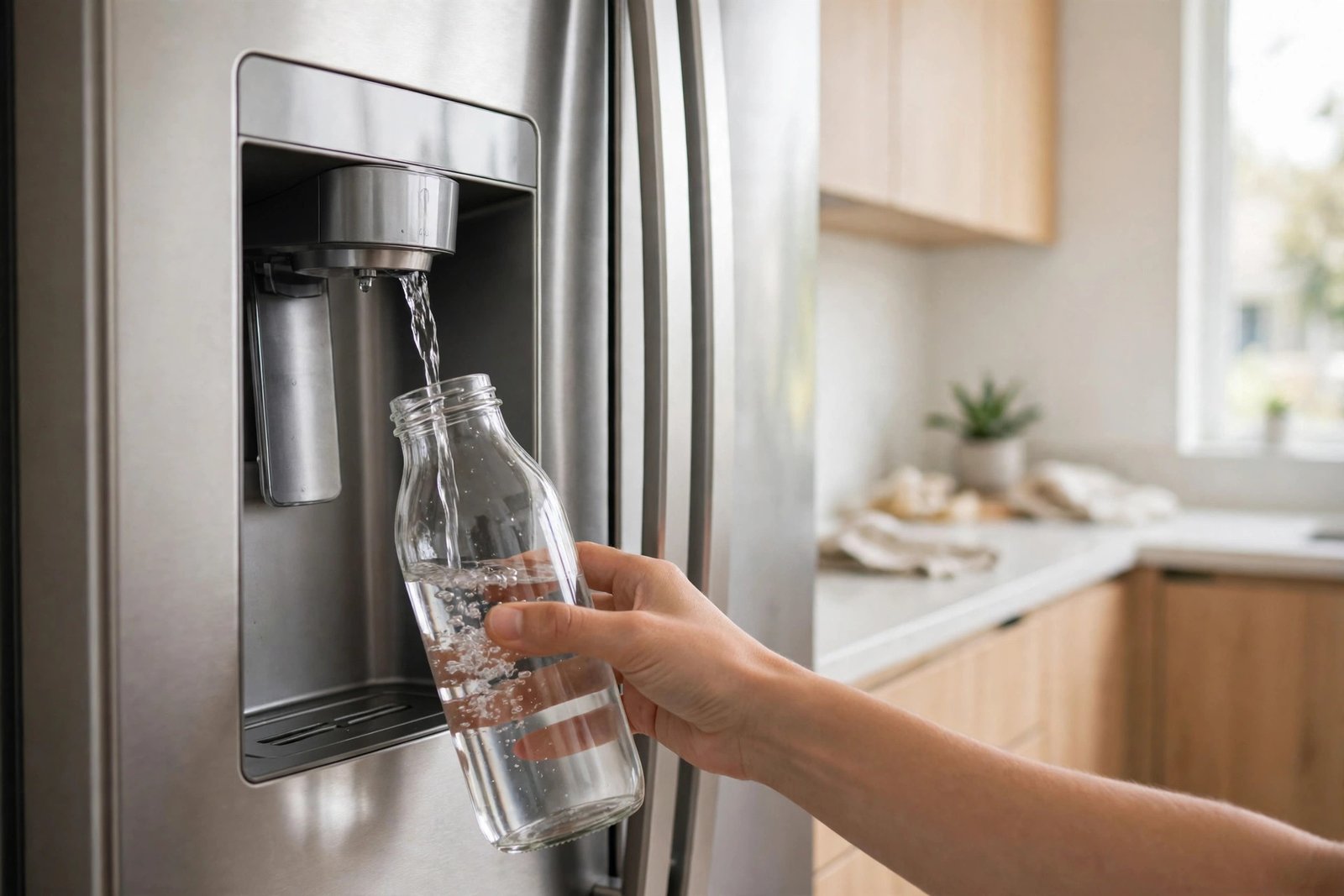
The best filter is the one that requires nothing from you. A fridge filter works every time anyone uses the dispenser or ice maker — no jug to refill, no countertop unit to remember, no waiting. That convenience is why fridge-filtered homes tend to keep the habit: the water is simply there, cold and ready, whenever anyone wants it.
What filtered water does not do
Honesty matters here, because filter marketing often overpromises:
- A standard fridge carbon filter is not a water softener — it will not fix hard-water scale.
- It is not a purifier for unsafe water — if your supply has a boil advisory or a known contamination problem, follow your water authority’s instructions, not a filter box.
- It does not remove everything. It is designed for taste, chlorine and sediment. Specific contaminant claims need a system certified for that contaminant, not a general carbon cartridge.
Buying genuine by exact part number matters too: a lookalike cartridge can restrict flow or bypass filtration entirely, as our Genuine vs Compatible guide explains. If you are unsure which filter your fridge takes, our Complete EveryDrop Buying Guide lists them all in one table.
The bottom line
Filtered tap water pays for itself in taste, convenience and avoided plastic within weeks, and it keeps paying as long as the cartridge is changed on schedule — about every 6 months. The benefit disappears the moment the filter is left in too long, so set the reminder when you fit the new one.
FAQ
Is filtered tap water healthier than unfiltered tap water?
City tap water is already treated to safety standards. Filtering mainly improves taste, chlorine and sediment. It is not a medical upgrade — just better-tasting, more convenient water.
Does filtered water save money vs bottled water?
Yes, by a large margin. A $39.99 fridge cartridge covering about six months costs far less than the equivalent bottled water over the same period.
How often should I change a fridge filter to keep the benefits?
About every 6 months, or sooner if flow slows or taste changes. A spent filter gives back the chlorine taste and sediment you filtered out in the first place.
Does a fridge filter soften hard water?
No. Standard fridge carbon filters do not soften water. Hardness needs a softener or a system designed for it, not a fridge cartridge.