

“Best home water filtration system” has no single answer — the right system depends on your water source, what is actually in your water, and what you are trying to fix. A family on chlorinated city water needs something different from a well owner with iron and sediment. Here are the main options, compared honestly, so you can pick the one that fits.
Fridge filters: the easiest win for most homes
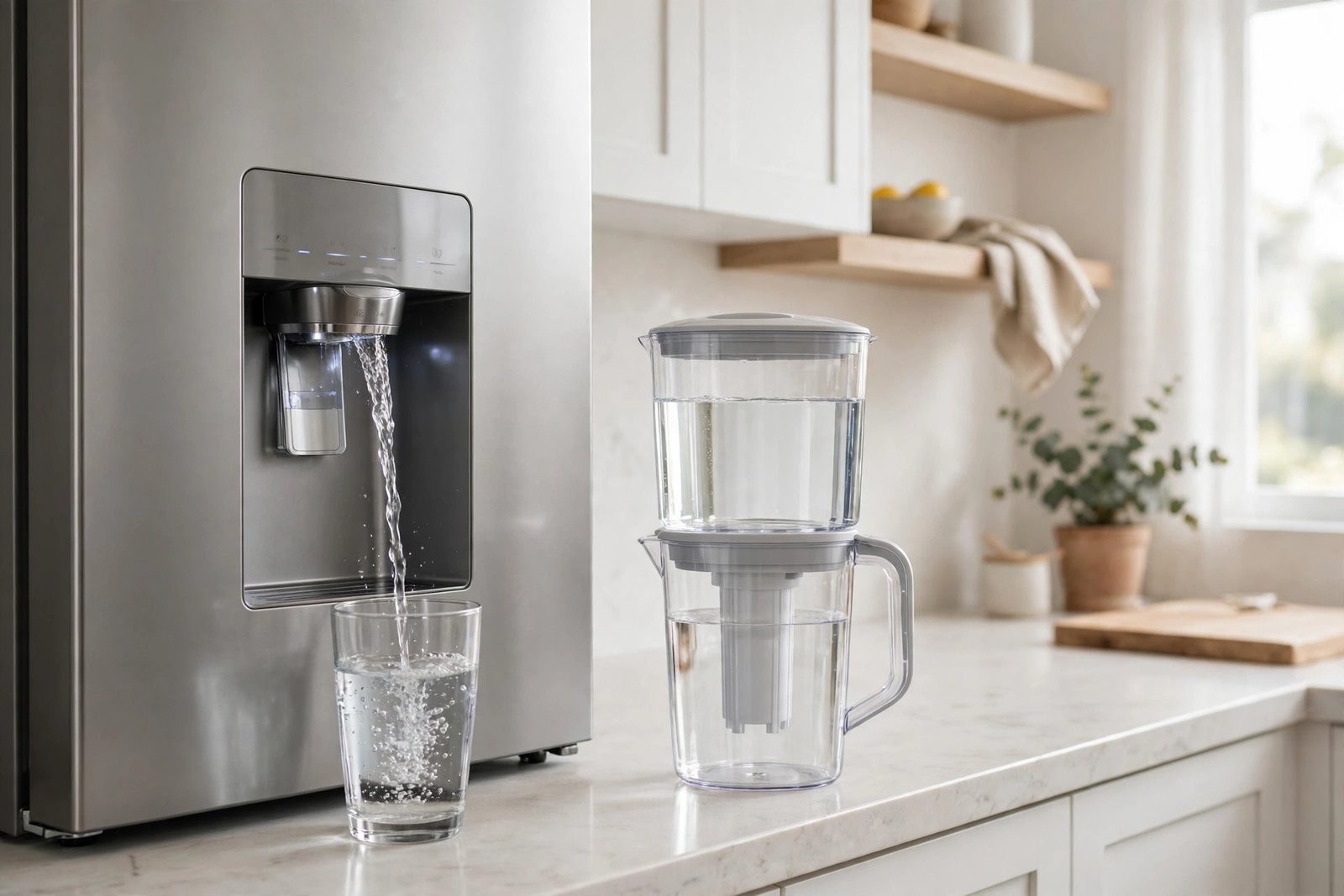
If your fridge already has a dispenser or ice maker, its built-in filter is the lowest-effort upgrade you can make. A genuine cartridge uses activated carbon filtration to improve taste and chlorine, catches sediment, and costs little per year — and it needs no installation, no counter space and no plumber. The catch is scope: it filters only the water that passes through the fridge, not every tap, and it must be the exact part number for your model.
Our Complete EveryDrop Buying Guide matches every EveryDrop number in one table. The best-known example, genuine EveryDrop Filter 1 (EDR1RXD1), is $39.99 with free US shipping and 30-day free returns, against $59.99 at the official store — and buying genuine by part number, rather than a lookalike, is what keeps the seal and flow right, as our Genuine vs Compatible guide explains.
Best for: city-water homes that mainly want better-tasting drinking water and ice.
Gravity-fed systems: no plumbing, whole-jug filtering
Gravity systems sit on the counter: you pour water in the top, it drips through filter elements into the lower chamber, and you dispense from a tap. They need no installation and no water pressure, which makes them popular for rentals, cabins and emergency backup. The trade-off is speed — filtering is slow — and the elements need periodic cleaning and replacement on schedule. Our guide to How Long Black Berkey BB9-2 Filters Last covers element lifespan honestly, including the cleaning that keeps them performing.
Best for: renters, off-grid homes, and anyone who wants filtered water without touching the plumbing.
Under-sink and countertop filters: one tap, better capacity
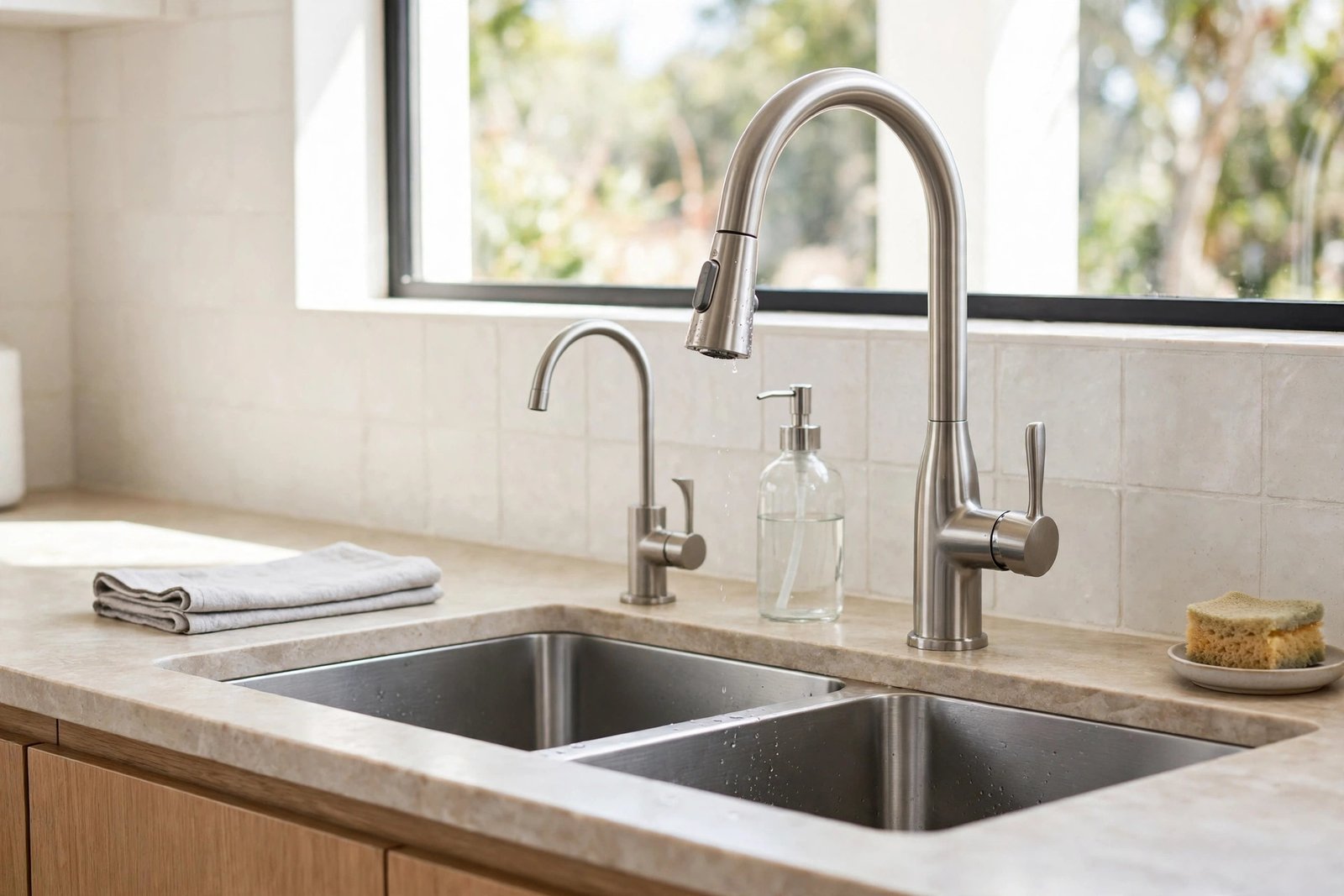
A dedicated filter tap at the sink filters more water than a fridge cartridge and usually lasts longer between changes, but it needs installation space under the sink and a small amount of plumbing work. Countertop units that attach to a faucet are the renter-friendly version, at the cost of counter space and a slower flow.
Best for: homes that want filtered water at the main kitchen tap without a whole-home system.
Whole-home systems: every tap, bigger commitment
Whole-home filtration and softening treat water at the point it enters the house. They make sense when the problem affects everything — very hard water, heavy sediment, or a well with multiple issues — but they cost far more, need professional installation, and still may not cover everything: a softener, for example, handles hardness but is not a drinking-water purifier on its own. Get your water tested before committing to this tier; treating a problem you do not have is the most expensive mistake in this category.
Best for: well owners and very hard-water homes with whole-house symptoms.
How to choose in five minutes
- Test first. A basic water test tells you whether you are fighting chlorine, hardness, sediment, iron or something else. Guessing leads to buying the wrong system.
- Match the problem to the tier. Taste and chlorine alone? A fridge or countertop filter is enough. Hardness everywhere? Think softening. Multiple well issues? Whole-home may be justified.
- Count the running cost. The cheapest system to buy is rarely the cheapest to run — add up a year of cartridges or elements before deciding.
- Check fit before price. A filter that does not match your fridge or faucet exactly is money wasted, however cheap it looked.
Start with the smallest system that solves your actual problem. You can always step up later; stepping down from an oversized system just wastes the money already spent.
FAQ
What is the best home water filtration system overall?
There is no single best system — it depends on your water source and problem. For taste and chlorine in a city-water home, a fridge filter is usually enough; for well water with several issues, a larger system may be justified.
Is a fridge filter enough for drinking water?
For most city-water homes, yes: it improves taste, chlorine and sediment for the water you drink and the ice you use. It does not treat every tap and does not soften water.
Are gravity systems better than fridge filters?
They solve different problems. Gravity systems need no plumbing and filter a jug at a time, but slowly. Fridge filters are faster and automatic but only serve the fridge. Pick by your kitchen, not by a ranking.
Should I get my water tested before buying?
Yes. A test costs little and stops you buying the wrong system. It is the single most useful step before any filtration purchase.