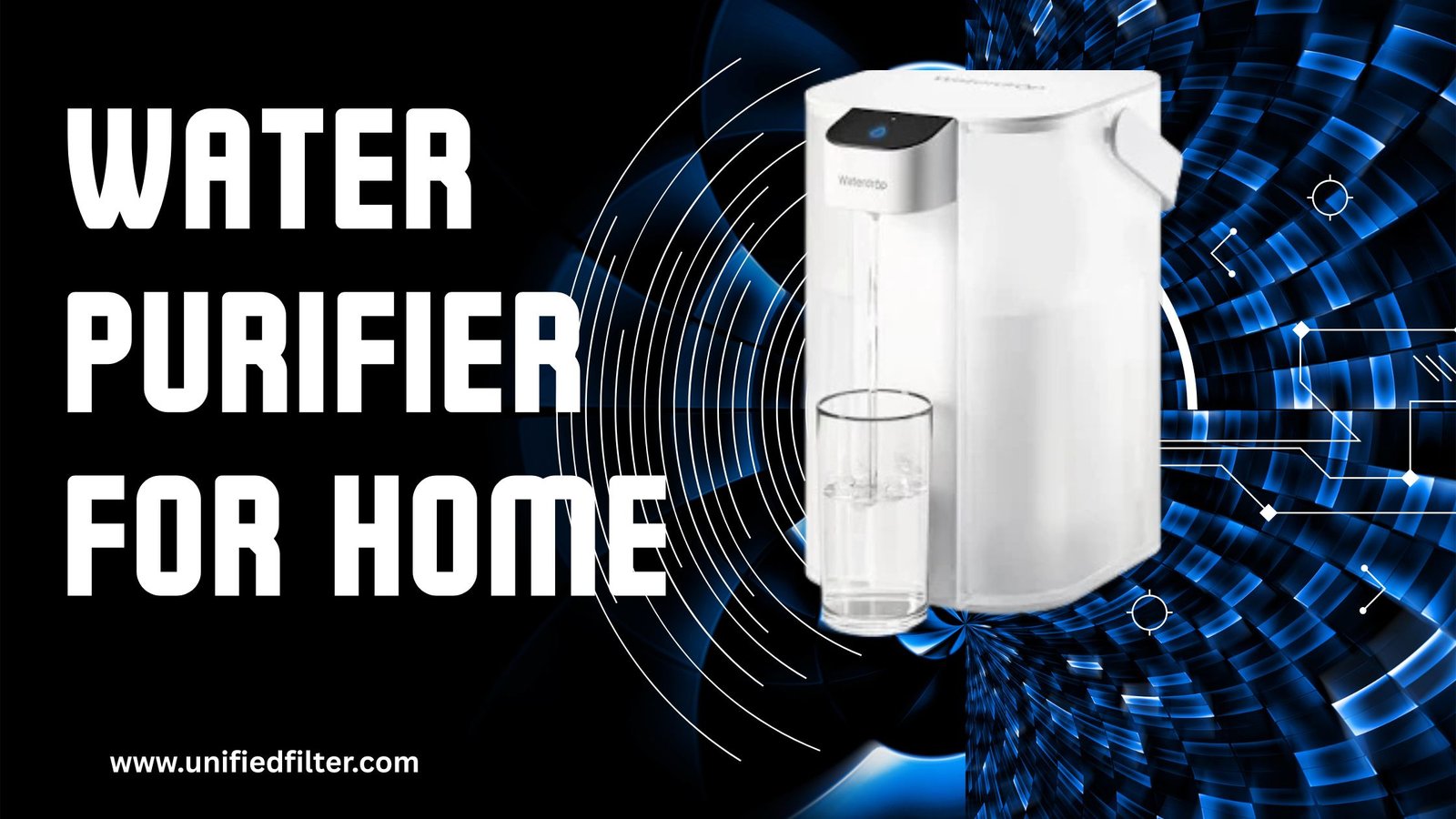

Search for a “water purifier” and you will be offered pitchers, faucet attachments and refrigerator cartridges — almost none of which are purifiers in any formal sense. The word has become a marketing shortcut for “something that makes water better”, but filter and purifier describe two different jobs, held to two different standards. This page explains the distinction: what a purifier has to do, what the cartridge in your fridge actually is, why that is normally exactly what a home needs — and when genuine purification matters and a fridge filter is not the answer.
What “Purifier” Actually Means
In US regulatory usage, a water purifier is a device expected to remove or inactivate microbiological contaminants — bacteria, viruses and cysts — to a defined standard. That is a much higher bar than filtration. A filter is generally understood to work by physical and chemical means: straining particles and, in the case of carbon, adsorbing chemicals. A purifier must demonstrate that the water coming out is microbiologically safe, which typically means technologies such as reverse osmosis paired with disinfection, ultraviolet treatment, or membranes fine enough to be validated against microbes — and certification specifically for that purpose.
The honest consequence: the overwhelming majority of home products sold with the word “purifier” in the listing title — pitchers, faucet mounts, fridge cartridges — are filters. They are not purifiers, and no fridge cartridge should ever be relied on to make microbiologically unsafe water safe.
What the Cartridge in Your Fridge Actually Is
A refrigerator water filter is an activated carbon block cartridge. Water passes through the carbon, and contaminants are adsorbed onto its enormous internal surface area — and it is very good at chlorine taste and odour. Certified cartridges go much further. Take the genuine EveryDrop Filter 1, the EDR1RXD1: its product page lists certification to NSF/ANSI Standards 42, 53 and 401 plus CSA B483.1, and describes it as certified to reduce up to 70 contaminants, including lead, pesticides and pharmaceuticals, and 99% of microplastics. In plain terms: Standard 42 covers taste, odour and chlorine; Standard 53 covers health contaminants such as lead; Standard 401 covers pharmaceuticals and other emerging compounds. That is a serious, independently tested filtration specification — and it still is not purification, because none of those standards is a microbiological purification claim. Our guide to what a water filter for your fridge does walks through the cartridge families in full.
Filter vs Purifier, Side by Side
| Water filter | Water purifier | |
|---|---|---|
| Core job | Improve water quality: taste, odour, chemicals, particles | Make water microbiologically safe |
| Typical method | Carbon adsorption, sediment straining | Validated membrane, RO + disinfection, UV, or combined systems |
| Covers bacteria and viruses? | Not as a certified claim | Yes — that is the defining requirement |
| Covers lead, pesticides, pharmaceuticals? | Yes, when the cartridge is certified for them (e.g. NSF/ANSI 53 / 401) | Depends on the system’s stages; purification alone is about microbes |
| Example in a home | The cartridge in your fridge, a pitcher, an under-sink carbon unit | A system certified specifically for microbiological purification |
| Right tool when… | Your water is treated municipal water and you want it cleaner and better-tasting | The supply itself may carry microbes — untreated well water, a boil advisory |
What a Fridge Filter Does Not Do
Two limits are worth stating plainly, because “purifier” marketing blurs both. First, as covered above: a carbon fridge filter makes no certified claim against bacteria or viruses. Second, carbon does not meaningfully reduce total dissolved solids (TDS), and it does not soften hard water — minerals pass through, by design. If your problem is scale on the kettle or a TDS reading you want lowered, that is a softener’s or a reverse-osmosis system’s job, not a cartridge’s. Our map of water filtration systems for homes lays out which machine solves which problem, including where point-of-use filters like ours sit in the picture.
Why a Filter Is Normally the Right Tool Anyway
Here is the context that makes the distinction less alarming than it sounds: municipal water in the US is disinfected by the utility before it ever reaches your home. The microbes a purifier defends against are, in a normally functioning public supply, already dealt with upstream. What can still happen to that water on its way to your glass is picking up chlorine taste and, in older plumbing, metals such as lead. That last stretch is exactly the fridge filter’s territory: certified carbon filtration at the point where you drink, reducing the chemicals and metals its certification names. A purifier in that kitchen would be answering a question the water supply has already answered.
When You Genuinely Need Purification
There are real exceptions, and they deserve a straight answer rather than a sales pitch:
- Untreated private well water. A well is not disinfected by a utility. If your home runs on one, microbial testing and, where indicated, a properly certified purification or disinfection system is the correct route — not a fridge cartridge.
- A boil-water advisory. When your utility issues one, follow it. Boil the water as directed; do not rely on a filter to substitute, and replace the cartridge afterwards if the manufacturer advises it, since a contaminated supply can foul a filter.
- A compromised or unknown supply — after flooding, plumbing work or a known contamination event. Test first, and follow your local health authority’s guidance on what the results require.
In each case the pattern is the same: test the water, follow the health guidance, and buy a device certified for the specific job. We sell refrigerator filters; if your situation calls for purification, we would rather tell you that than pretend a cartridge is something it is not.
What to Buy for a Normal Kitchen
For treated municipal water, the practical answer is a genuine, certified fridge cartridge, changed on schedule. The genuine EveryDrop EDR1RXD1 is $39.99 one-time at Discounted Filter Store, with free US shipping on any order amount — the official EveryDrop store charges $59.99 one-time, or $48 only with a subscription; Filters Fast ships free only at $99+ and Discount Filter at $70+. Orders are processed within 1–2 business days and delivered in 3–5 business days via USPS, and unopened filters return within 30 days, free, with a prepaid label. Call it a filter — it is a very good one — and save the word purifier for the jobs that truly need it.
Frequently Asked Questions
Is a refrigerator water filter the same as a water purifier? No. A fridge filter is a carbon filter, certified — on genuine cartridges — against standards like NSF/ANSI 42, 53 and 401 for taste, odour and named chemical contaminants. A purifier must meet a microbiological standard against bacteria and viruses. Different jobs, different certifications.
Can my fridge filter make unsafe water safe to drink? No. A carbon cartridge carries no certified purification claim. If your supply is under a boil advisory or comes from an untreated well, follow health-authority guidance and use a device certified for purification — and treat the water as directed in the meantime.
What does a fridge filter actually remove, then? Chlorine taste and odour at a minimum, and on a certified cartridge much more: the genuine Filter 1 is certified to reduce up to 70 contaminants, including lead, pesticides and pharmaceuticals, and 99% of microplastics, per its product page.
Does a filter remove bacteria from well water? Not as a certified claim. Some carbon cartridges reduce cysts as part of a Standard 53 listing, but that is not purification and not a defence for untreated well water. Wells call for testing and, where needed, a certified disinfection or purification system.
If municipal water is already disinfected, why filter at all? Because disinfection is not the same as finished quality: chlorine taste arrives with the disinfection, and water can pick up lead and other contaminants from plumbing on its way to your glass. Certified point-of-use filtration handles that last stretch.
When should I choose reverse osmosis or UV instead? When the problem is dissolved solids (RO’s territory) or microbial safety (where UV and certified purification systems belong). Neither is a fridge cartridge’s job — match the machine to the problem, not to the marketing word.