
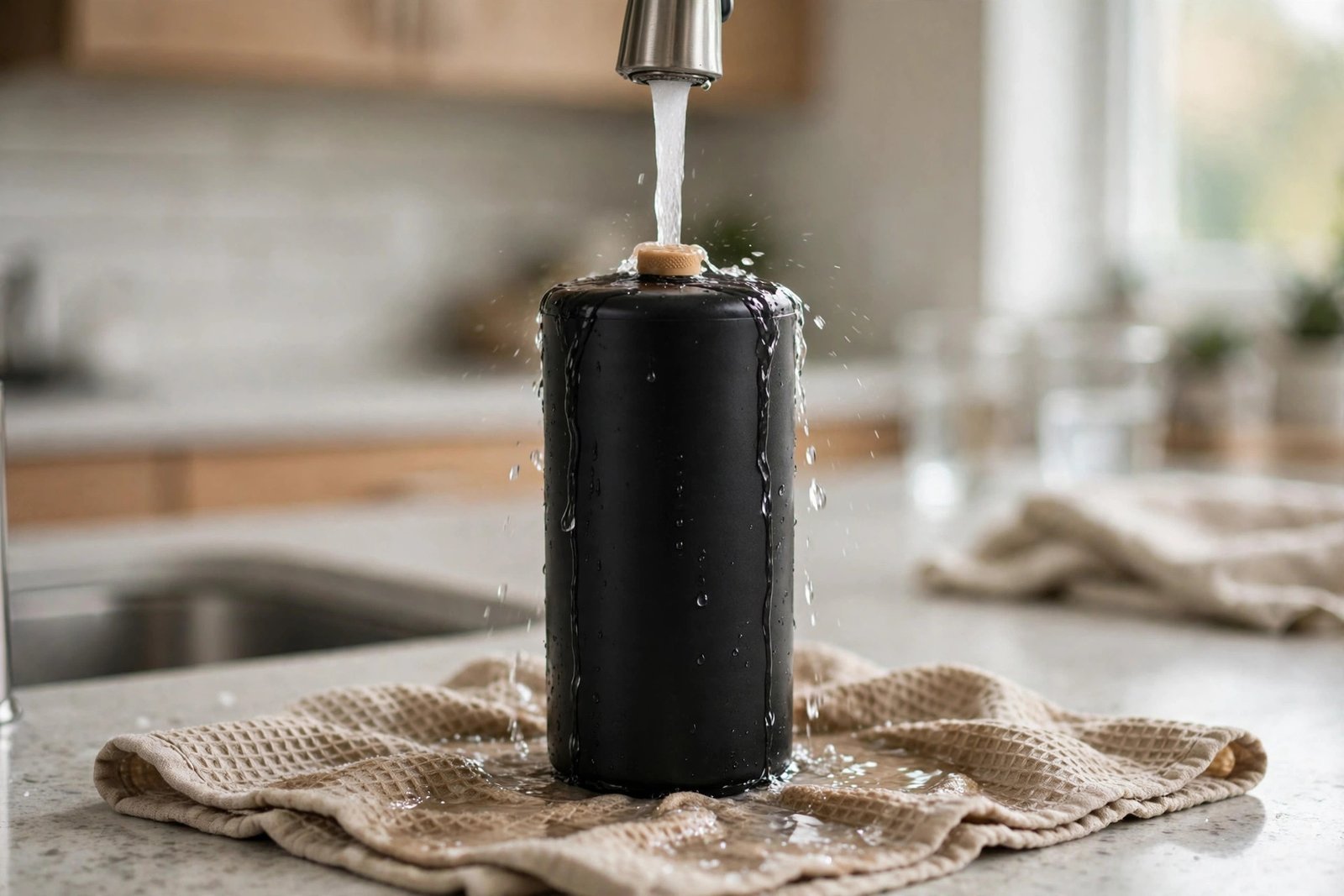

A brand-new pair of Black Berkey BB9-2 elements can trick you. Install them dry, fill the upper chamber, and the first water may crawl through at a drip an hour — and taste like the packaging. Nothing is broken. The elements are full of trapped air, and until that air is pushed out and the pores are wetted, gravity has almost nothing to work with. That five-minute job is called priming, and this guide walks through it without flooding your counter.
What you need
- Your two new BB9-2 elements, with the priming button from the box (the small tan rubber piece — it is in there, check before you start)
- A kitchen tap that can run a gentle, steady stream
- A towel under the work area — this is a wet job by design
- About five minutes per element
No tools, no soaking buckets, no overnight waits.
Step 1: Fit the priming button
Push the priming button onto the threaded stem at the top of the element so it seals snugly over the threads. Its job is simple: let you press the element against the tap and force tap water into the element the wrong way, pushing the trapped air out through the walls.
Step 2: Press to the tap and start SLOWLY
Hold the element with the priming button pressed firmly against the tap outlet. Turn the water on gently — a sudden full blast can damage the element and will definitely soak you. A slow, steady pressure is what you want.
Step 3: Watch for the sweat
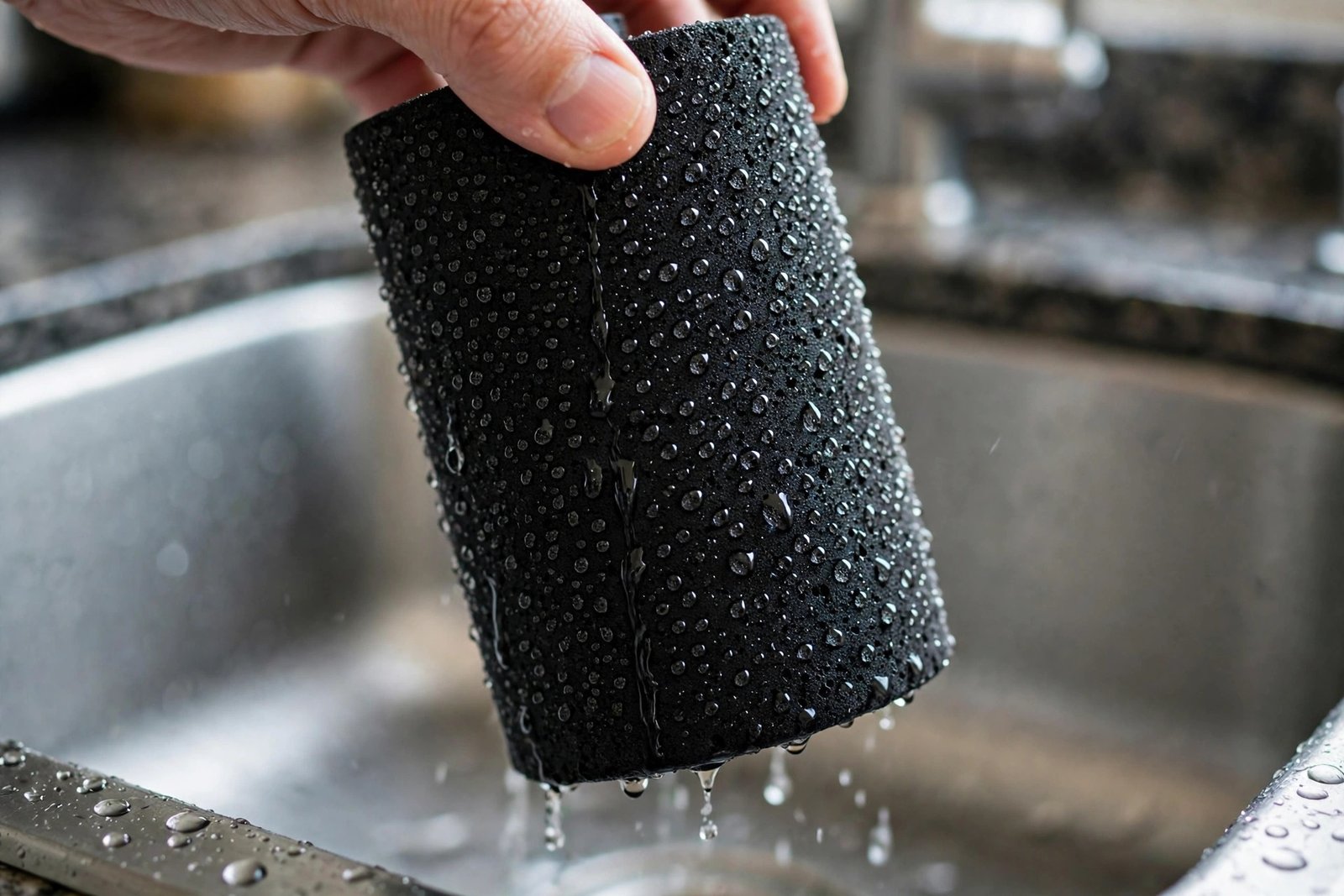
Within a minute or two, water starts appearing on the outside of the element — first as beads, then as an even sheen across the whole surface, like the element is sweating. That is the sign the air is out and the pores are wetted through. Keep going until the beading is even over the entire element, top to bottom — dry patches mean air is still trapped behind them.
Step 4: Repeat for the second element
Same routine: button on, gentle pressure, wait for the even sweat. Two elements, roughly ten minutes total, and you have just skipped the two days of frustrating drips an unprimed pair would have given you.
Step 5: Install as normal
Fit the primed elements into the upper chamber of your Berkey system with the washers and wing nuts from the box — snug, not forced. Fill the top chamber and let the first full batch filter through, then discard that first batch. It carries the last of the manufacturing dust and loose media. From the second fill onward, the water is the water you bought the system for.
If the flow is still slow
- It was never really primed: if the “sweating” step was patchy, redo it — one more proper prime fixes most slow pairs.
- It slowed down months later: that is a different story — surface clogging from source water. The elements can be scrubbed clean under running water and put back into service; our Black Berkey BB9-2 lifespan guide covers the scrub-back routine and the honest maths of the pair’s 6,000-gallon rating.
- One element is fast, one is slow: prime the slow one again — priming is per-element, and pairs are rarely perfectly matched out of the box.
A pair of BB9-2 elements is $59.99 here with free US shipping — for a filter set rated up to 6,000 gallons, ten minutes of priming on day one is the cheapest performance upgrade there is. Spread over that capacity, the cost per gallon is tiny — our genuine fridge filter cost-per-year breakdown shows the same maths for cartridge filters if you run both systems. Orders are processed in 1–2 business days, delivered in 3–5 business days via USPS, with 30-day free returns on a prepaid label. Prime once, prime properly, and the system does the rest by gravity.
FAQ
Do I really have to prime Black Berkey elements?
Yes. An unprimed element is full of trapped air, so water barely passes and the first fills can drip for days. Priming with the button in the box takes a few minutes per element and fixes it on day one.
How do I know an element is fully primed?
Water beads evenly across the entire outside surface — the “sweat test”. Dry patches mean air is still trapped behind them; keep the gentle pressure going until the beading is even, top to bottom.
Should I drink the first batch after priming and installing?
No. Let the first full batch filter through and discard it — it carries the last of the manufacturing dust and loose media. Drink from the second fill onward.
My pair was fast, but months later it slowed down. Is it finished?
Usually not. Months-later slowdown is normally surface clogging: scrub each element clean under running water and re-prime. Our lifespan guide covers when a pair is genuinely at the end of its 6,000-gallon rating.